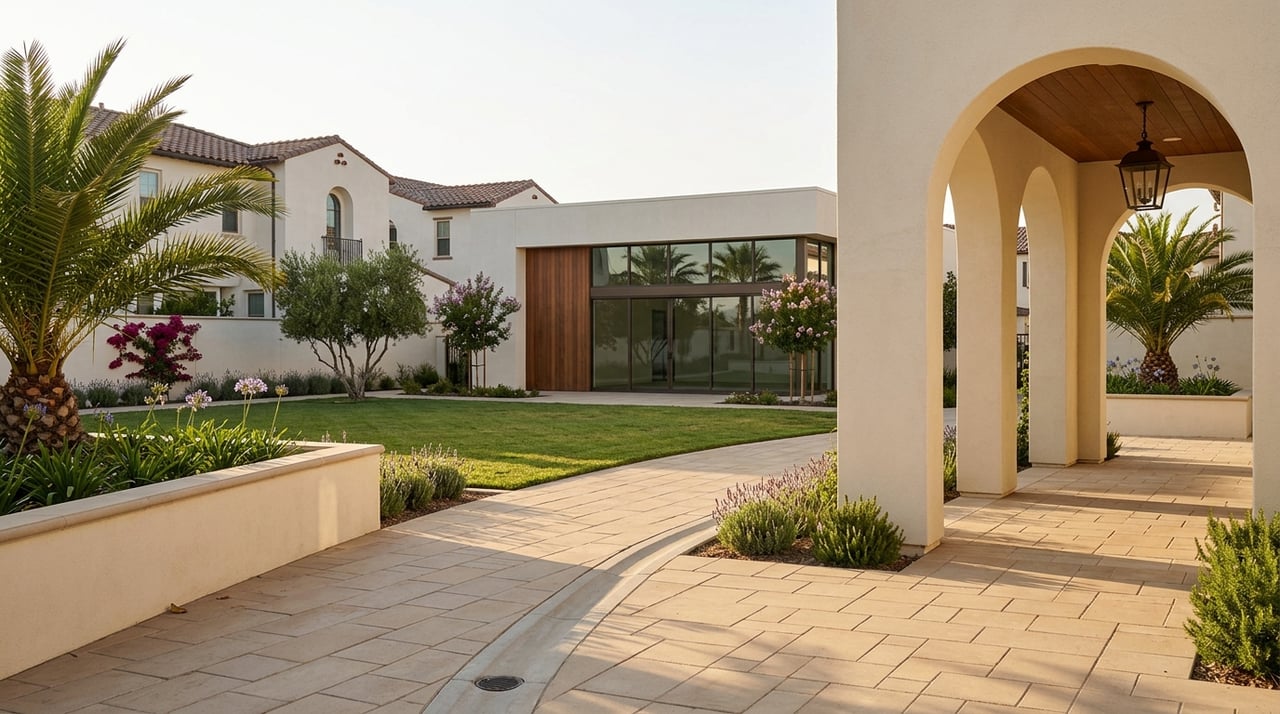
What does day-to-day life in Irvine actually feel like? If you are thinking about moving within the city, buying here, or preparing to sell, that question matters more than any brochure-style description ever could. Irvine’s master-planned villages shape how people spend their mornings, handle errands, get around, and enjoy weekends, and understanding that rhythm can help you make smarter real estate decisions. Let’s dive in.
How Irvine’s Village System Works
Irvine is not organized around one traditional downtown core. Instead, the city follows a village-style structure rooted in the Irvine Ranch Master Plan, with planning areas that cluster homes, parks, schools, open space, and nearby shopping into local nodes.
That design has a real effect on everyday life. In many parts of Irvine, your routine tends to center on the places closest to your village, with larger shopping, dining, and regional trips happening along major corridors or at bigger destination areas.
The city’s geographic areas include places like Woodbury, Orchard Hills, Portola Springs, Northwood, Quail Hill, Turtle Rock, Great Park, and Westpark. For residents, that often means Irvine feels less like one large suburb and more like a connected network of neighborhoods with their own patterns, amenities, and meeting points.
Why Parks Are Part of Daily Life
One of the clearest features of Irvine living is how much the park system shapes the city. Irvine says it has 22 community parks and more than 40 neighborhood parks and special facilities, and the city treats parks as a coordinated system rather than isolated pieces of land.
That matters because parks here are not just for occasional weekend visits. They are woven into normal routines, from morning walks and playground stops to sports practices, classes, picnics, and community events.
Many community parks include more than open grass. Depending on the location, you may find community centers, kitchens, picnic shelters, classrooms, sports fields, exercise spaces, and other facilities that support both drop-in use and scheduled programming.
Heritage Park as a Village Hub
Heritage Community Park shows how much can be built into one local hub. At about 44 acres, it includes the Heritage Park Community Center, Irvine Fine Arts Center, Child Resource Center, William Woollett Jr. Aquatics Center, sports fields, play areas, and picnic areas.
The city’s current master plan for Heritage Park also adds expanded community, arts, and aquatics facilities. For residents nearby, that kind of setup can make one park a regular part of weekdays as well as weekends.
Other Villages Have Similar Anchors
Several Irvine villages follow the same pattern of pairing recreation, programming, and public gathering spaces.
- Woodbury includes a community center with classes for children and adults, along with fields, basketball courts, picnic shelters, and a courtyard.
- Northwood offers classes in sports, arts, cooking, science, karate, tennis, soccer, and adult fitness, plus park features like fields, courts, play areas, picnic space, and bicycle trail access.
- Quail Hill combines a community park, community center, exercise room, and trailhead, giving residents both recreation space and access to open space.
- Turtle Rock includes a community park, nature center, amphitheater, courts, play areas, and a self-guided trail walk through native habitat.
Libraries and Retail Close to Home
The village model is not just about parks. Irvine Public Library, founded in 2025, includes Heritage Park, University Park, and Katie Wheeler locations, which gives residents local access to books, technology, and programs across the city.
Retail also follows a distributed pattern. Irvine’s retail inventory includes neighborhood-serving centers, regional malls, smaller retail areas in residential communities, and centers that serve office districts like the Spectrum and Irvine Business Complex.
In practical terms, that often means your day-to-day errands can stay close to home, while larger shopping and dining outings happen in bigger commercial areas. This is one reason many residents experience Irvine as a series of connected lifestyle hubs rather than one central destination.
Schools and Daily Routines in Irvine
Schools are another major part of village life. Irvine Unified School District serves more than 38,000 TK-12 students across 24 elementary schools, five K-8 schools, six middle schools, five high schools, one alternative high school, and two virtual academies.
The district also states that, within Irvine’s master-planned community, schools are placed at the heart of each neighborhood. That planning approach helps explain why school drop-off, pickup, and after-school activities often shape traffic patterns and daily timing within each village.
For many households, this creates a routine that stays very local during the week. Mornings, afternoons, park visits, and nearby errands often happen within a relatively small radius of home.
Getting Around Irvine Day to Day
Mobility in Irvine is a mix of local convenience and regional connectivity. The city reports 113.24 miles of off-street bikeway trails and 286.42 lane miles of on-street bikeways, which supports biking for a range of everyday trips.
The city also opened its first Class IV protected bikeway on Cadence between Radial and Chinon. That adds another layer to how some residents move through Irvine without relying only on a car.
For longer trips, Irvine Station is an important transportation hub. It is served by Amtrak, Metrolink, and OCTA buses, and the city notes that it serves nearly a million commuters annually, making it a central option for regional travel.
One important update is that iShuttle service was discontinued on June 28, 2025. Today, residents are more likely to rely on rail, OCTA service, biking, vanpools, ride-hailing, and driving than on a city shuttle network.
What Commuting Often Feels Like
Because of Irvine’s geography and road network, longer commutes often feel freeway-oriented. Great Park sits roughly in the center of the city and is about 15 minutes from John Wayne Airport, with access to I-5, I-405, State Route 133, and the 241 toll road.
At the same time, village-to-village movement can be much more local. Depending on where you live, many everyday trips can happen by short drive, bike ride, or a visit to nearby parks, schools, and retail centers.
What Weekends in Irvine Often Look Like
Weekend life in Irvine often centers on outdoor recreation, recurring events, and community spaces that are already built into the village system. Instead of needing to leave town for simple leisure, many residents have several easy options close to home.
Great Park is one of the city’s biggest anchors. It spans about 1,300 acres, with more than 500 acres complete and about 300 more in progress, and it hosts sports, arts, events, and community programming.
That scale makes Great Park feel both regional and local. It can be a destination for larger events, but it also supports the kind of repeat visits that become part of normal family routines.
Great Park Trails and Casual Outdoor Time
For a more everyday outdoor experience, Great Park Trails offers 1.5 miles of walking and biking paths across 53 acres of natural landscape. The area includes shaded benches, picnic tables, barbecues, restrooms, and three undercrossings, so visitors do not need to cross busy streets.
That setup makes the trails practical for casual walks, stroller outings, short bike loops, and low-key weekend time outside. It reflects a broader Irvine pattern where recreation is designed to be easy to use, not just impressive on paper.
Farmers Market and Recurring Rituals
The Certified Farmers Market is another example of everyday community life. As of November 10, 2024, it relocated to Stonegate Elementary and runs on Sundays from 10 a.m. to 2 p.m.
Regular events like this help define how residents experience Irvine. The city’s lifestyle is often shaped by repeat neighborhood rituals, not only major shopping centers or one-time attractions.
Open Space and Trail Access
For residents who enjoy nature, Irvine’s open-space system adds another layer to daily life. The preserve system protects thousands of acres and connects to larger regional resources like Cleveland National Forest, San Joaquin Marsh, and Laguna Coast Wilderness Park.
Some trail access is self-guided, while other locations, including Hicks Haul Road, Orchard Hills, and the Portola Staging Area, are available only through guided scheduled programs. That is useful to know if trail access is a major part of the lifestyle you want.
Arts and Culture in the Park Network
Irvine’s parks are not only about sports and trails. The Irvine Fine Arts Center at Heritage Community Park offers classes, events, and open studios, and Great Park continues to expand arts programming and exhibitions.
This adds another dimension to village life. In Irvine, public spaces often combine recreation, culture, and community use in the same setting.
What This Means for Buyers and Sellers
If you are buying in Irvine, it helps to think beyond city limits and focus on how a specific village supports your routine. Your experience may be shaped by how close you are to parks, trails, retail, libraries, community centers, and major commuter routes.
If you are selling, understanding village lifestyle is just as important. Buyers are often evaluating not only the home itself, but also how the surrounding area fits their daily rhythm, from weekday errands to weekend recreation.
That is why neighborhood-specific positioning matters in marketing. A home near a park hub, trail connection, community center, or convenient retail node may appeal to buyers for reasons that go far beyond square footage.
For sellers in Irvine, presenting that lifestyle clearly can make a real difference. At Irene and Ricky Zhang Real Estate Group, that local context is part of how we help homeowners position their property with premium marketing, strong presentation, and neighborhood-specific strategy.
If you are planning a move in Irvine and want guidance tailored to your village, your timeline, and your goals, connect with Irene and Ricky Zhang Real Estate Group to schedule a free listing consultation.
FAQs
How are Irvine’s master-planned villages organized?
- Irvine is organized as a network of village-style planning areas that cluster homes, parks, schools, open space, and nearby retail instead of centering daily life around one downtown core.
What amenities shape daily life in Irvine villages?
- Common daily-life amenities in Irvine villages include community parks, neighborhood parks, community centers, libraries, trail access, and nearby retail centers for errands and dining.
How walkable are Irvine villages for everyday routines?
- Irvine villages are generally designed to support short local trips to parks, schools, and retail nodes, and the city’s extensive bikeway network adds more non-car options for everyday movement.
What transportation options do Irvine residents use for commuting?
- Irvine residents commonly use driving, biking, OCTA buses, vanpools, ride-hailing, and commuter rail through Irvine Station, which is served by Amtrak and Metrolink.
What do people do on weekends in Irvine?
- Weekend activities in Irvine often include visiting Great Park, using neighborhood parks, walking or biking local trails, attending the Sunday farmers market, and joining arts or recreation programs.
Why does Irvine’s village lifestyle matter when selling a home?
- Irvine’s village lifestyle matters in home sales because buyers often compare not just floor plans and finishes, but also proximity to parks, trails, community centers, retail, and commuter routes that shape daily life.
