Contact
Irene and Ricky Zhang Real Estate Group
(949) 554-4889
[email protected]
[email protected]
4010 Barranca Pkwy Ste 100
Irvine CA 92604
Irene Zhang | CA DRE# 01967217
Ricky Zhang | CA DRE# 01972236
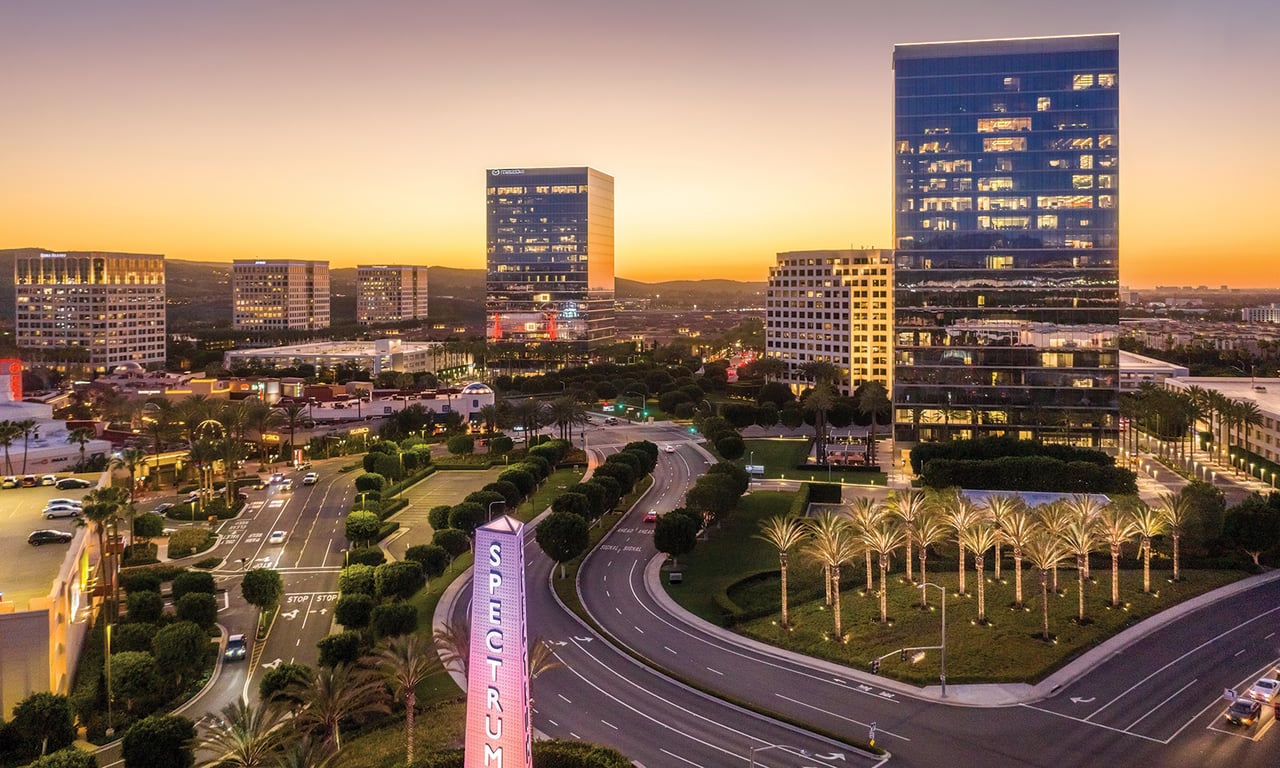
Few cities in America can claim what Irvine has achieved: a planned community built from agricultural land in the 1960s that has become one of the safest, most academically excellent, and most economically vibrant cities in the entire country. For homeowners across Irvine's more than 60 distinct villages and communities, that reputation translates directly into sustained buyer demand and long-term value. Whether your home sits in a coastal-adjacent hillside enclave, a lakeside village in the heart of the city, or a brand-new neighborhood at the Great Park, you are selling into one of the most resilient and sought-after real estate markets in Southern California. At Irene and Ricky Zhang Real Estate Group, we bring deep, citywide expertise to help you achieve the strongest possible outcome.
Irvine is a master-planned city in central Orange County, California, developed beginning in the 1960s by the Irvine Company on land that was once part of the historic 93,000-acre Irvine Ranch. The city was formally incorporated on December 28, 1971, when residents of its five founding villages — Turtle Rock, University Park, Westpark, El Camino Real, and Walnut — voted to form a substantially larger city than originally envisioned. In late 2003, after a decade-long legal effort, Irvine annexed the former El Toro Marine Corps Air Station, adding 7.3 square miles that would later become home to the Orange County Great Park and its surrounding neighborhoods.
Today, Irvine spans 66 square miles and is home to approximately 318,000 to over 320,000 residents, making it the second most populous city in Orange County and the 63rd most populous city in the United States. The city's development has been guided from the beginning by a comprehensive master plan emphasizing residential villages, preserved open space, educational excellence, and economic diversity — a vision originally drafted by architect William Pereira alongside the founding of the University of California, Irvine, in 1965.
Irvine's population reflects extraordinary diversity, with Asian Americans comprising approximately 44–45% of residents and White non-Hispanic residents representing roughly 35–39% — making Irvine one of California's most internationally connected and culturally rich municipalities. The median household income stands at approximately $129,000 to $136,700, well above both state and national averages, and 70.6% of adults 25 and older hold a bachelor's degree or higher — more than double the national average.
Perhaps no single fact says more about Irvine's character than this: for 21 consecutive years, Irvine has been ranked the safest large city in America based on FBI Uniform Crime Reporting statistics, a streak unmatched by any other U.S. city with a comparable population. According to recent reporting, Irvine's violent crime rate is the lowest of any American city with a population over 250,000 — and in the most recent reporting year, the city of more than 330,000 residents recorded zero criminal homicides.
This safety record is not accidental. It reflects deliberate urban planning choices — open sightlines, prioritized lighting, walkable village design — combined with a police department built around community partnership and constitutional policing. For sellers, this is far more than a talking point: it is one of the single most powerful, evidence-based reasons buyers choose Irvine over comparable cities, and it is a credential that commands real premium in the marketplace.
Beyond safety, Irvine has also been recognized among America's happiest cities for 16 consecutive years, reflecting the city's more than 16,000 acres of permanently preserved parks and open space — fully one-third of the entire city — along with its strong economy, top-rated schools, and inclusive, multicultural community.
Irvine's economy generates approximately $28.5 billion annually, with an unemployment rate around 2.8% — figures that place the city among California's premier business destinations. The city is home to corporate headquarters for major companies in technology, biotechnology, and semiconductor industries, including Broadcom, Edwards Lifesciences, and Blizzard Entertainment, alongside thousands of additional businesses across the Irvine Spectrum and Irvine Business Complex employment corridors.
At the heart of Irvine's identity is the University of California, Irvine (UCI) — a top-ranked public research university enrolling over 36,000 students across a 1,474-acre campus, and contributing more than $5 billion annually to the regional economy. UCI is joined by Concordia University Irvine, Irvine Valley College, and satellite campuses of the University of La Verne and Pepperdine University, making Irvine one of the most education-dense cities in the state.
This economic and academic foundation directly supports Irvine's real estate market: a highly educated, well-compensated workforce continually seeks housing within the city, sustaining demand even through broader economic cycles that affect other markets more significantly.
Irvine's defining feature, both architecturally and as a place to live, is its organization into dozens of distinct master-planned villages and communities, each with parks, schools, and shopping centers within walking or short driving distance. From historic founding villages like Turtle Rock and Westpark, to lakeside Woodbridge, to luxury hillside enclaves like Turtle Ridge and Orchard Hills, to the rapidly growing Great Park Neighborhoods and Portola Springs — Irvine offers an extraordinary range of housing types, price points, and lifestyles, all unified under the same exceptional standard of planning, safety, and schools.
This village structure is one of the most important things for sellers to understand about the Irvine market: pricing, buyer demand, and market dynamics can vary meaningfully from one village to the next, even within a few miles of each other. Effectively selling an Irvine home requires not just citywide market knowledge, but granular understanding of the specific community, sub-enclave, and school attendance boundary your home falls within.
Irvine's housing market has consistently demonstrated resilience and strength, supported by constrained land supply, exceptional schools, and sustained demand from buyers relocating from across the country and around the world.
For sellers, Irvine's structural supply constraints — the city has very little remaining buildable land — combined with sustained demand from relocating professionals and families, continue to support a seller-favorable market even as national real estate trends show signs of normalization.
Selling a home anywhere in Irvine means competing for the attention of an informed, discerning buyer pool — one that has typically already researched school boundaries, HOA structures, Mello-Roos assessments, and comparable village amenities before ever stepping into your home. Achieving the strongest possible outcome requires an agent with genuine command of Irvine's complex village-by-village market dynamics.
At Irene and Ricky Zhang Real Estate Group, we bring:
If you own a home anywhere in Irvine and are considering your next move, we would welcome the opportunity to provide a complimentary, no-obligation home valuation tailored to your specific community.
📞 Contact Irene and Ricky Zhang Real Estate Group today to discuss what your Irvine home is worth in today's market.
Content prepared by Irene and Ricky Zhang Real Estate Group | Irvine, CA Real Estate Specialists
308,406 people live in Irvine, where the median age is 34.8 and the average individual income is $62,103. Data provided by the U.S. Census Bureau.
Total Population
Median Age
Population Density
Average individual Income
There's plenty to do around Irvine, including shopping, dining, nightlife, parks, and more. Data provided by Walk Score and Yelp.
Explore popular things to do in the area, including Eva Bookstore, Sand Canyon Plaza, and Trabuco Grove.
| Name | Category | Distance | Reviews |
Ratings by
Yelp
|
|---|---|---|---|---|
| Shopping | 0.74 miles | 0 reviews | 0/5 stars | |
| Shopping | 0.76 miles | 5 reviews | 3.6/5 stars | |
| Shopping | 1.13 miles | 2 reviews | 3.5/5 stars | |
| Shopping | 1.22 miles | 3 reviews | 1.7/5 stars | |
| Active | 0.65 miles | 0 reviews | 0/5 stars | |
| Active | 0.67 miles | 0 reviews | 0/5 stars | |
| Active | 1.02 miles | 1 review | 2/5 stars | |
| Active | 1.16 miles | 0 reviews | 0/5 stars | |
| Active | 1.17 miles | 1 review | 2/5 stars | |
| Active | 1.33 miles | 2 reviews | 2/5 stars | |
| Active | 1.37 miles | 1 review | 1/5 stars | |
| Active | 1.44 miles | 3 reviews | 5/5 stars | |
| Active | 1.44 miles | 0 reviews | 0/5 stars | |
| Active | 1.44 miles | 0 reviews | 0/5 stars | |
| Active | 1.46 miles | 5 reviews | 4.4/5 stars | |
| Active | 1.49 miles | 0 reviews | 0/5 stars | |
| Beauty | 1.02 miles | 1 review | 5/5 stars | |
| Beauty | 1.37 miles | 0 reviews | 0/5 stars | |
| Beauty | 1.37 miles | 11 reviews | 4.9/5 stars | |
| Beauty | 1.39 miles | 13 reviews | 1/5 stars | |
| Beauty | 1.44 miles | 0 reviews | 0/5 stars | |
| Beauty | 1.44 miles | 4 reviews | 4/5 stars | |
| Beauty | 1.44 miles | 2 reviews | 5/5 stars | |
|
|
||||
|
|
||||
|
|
||||
|
|
||||
|
|
||||
|
|
Irvine has 111,979 households, with an average household size of 2.6555555555555554. Data provided by the U.S. Census Bureau. Here’s what the people living in Irvine do for work — and how long it takes them to get there. Data provided by the U.S. Census Bureau. 308,406 people call Irvine home. The population density is 6,221 and the largest age group is Data provided by the U.S. Census Bureau.
Total Population
Population Density Population Density This is the number of people per square mile in a neighborhood.
Median Age
Men vs Women
Population by Age Group
0-9 Years
10-17 Years
18-24 Years
25-64 Years
65-74 Years
75+ Years
Education Level
Total Households
Average Household Size
Average individual Income
Households with Children
With Children:
Without Children:
Blue vs White Collar Workers
Blue Collar:
White Collar:
Explore Other Neighborhoods

IRENE AND RICKY ZHANG
REAL ESTATE GROUP
(949) 208-5555
[email protected]
[email protected]
Irene Zhang | CA DRE# 01967217
Ricky Zhang | CA DRE# 01972236
4010 Barranca Pkwy Ste 100
Irvine CA 92604
IRENE AND RICKY ZHANG
REAL ESTATE GROUP
(949) 208-5555
[email protected]
[email protected]
Irene Zhang | CA DRE# 01967217
Ricky Zhang | CA DRE# 01972236
4010 Barranca Pkwy Ste 100
Irvine CA 92604